
Breaking the Deadlock of Chinese Silicon Carbide: From Material Breakthrough to Empowering a New Era
As the global semiconductor industry spotlight once again shines on the podium in Tokyo, Japan, the name of a Chinese company, Tianyue Advanced, marks China's entry into the world's forefront in third-generation semiconductor materials. This breakthrough not only impacts the chip itself but will also profoundly impact numerous downstream industries, including industrial automation and new energy vehicles.
1. The industry signal behind the international gold award: Chinese silicon carbide is recognized globally
At the recent 2025 Semiconductor Industry Annual Awards Ceremony held in Tokyo, Japan, Chinese silicon carbide substrate manufacturer Tianyue Advanced Technology Co., Ltd. won the Gold Award in the "Semiconductor Electronic Materials" category. This is the first time a Chinese company has received this honor in its 31-year history, marking a significant milestone in gaining global recognition for Chinese semiconductor materials technology.
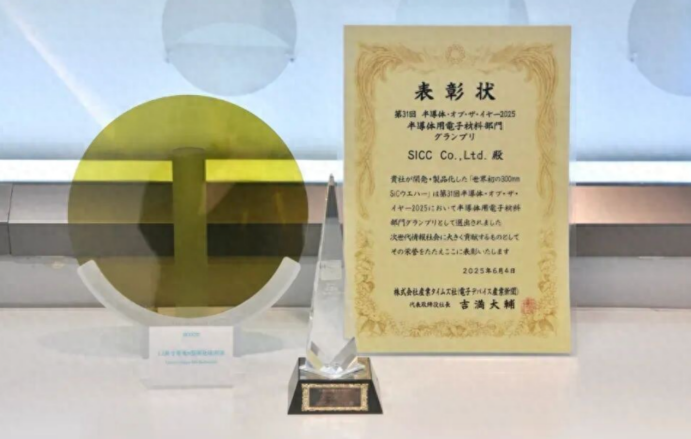
Compared to the more familiar lithography machines and processors, silicon carbide (SiC), an emerging semiconductor material, is an ideal choice for manufacturing high-efficiency power devices due to its superior high-voltage, high-temperature, and high-frequency performance. Its applications have already penetrated new energy vehicle electronic controls, photovoltaic inverters, 5G base stations, and other fields, and it also holds great potential in AR/VR devices.
2. From Catching Up to Leading: China's Technological Breakthrough in Silicon Carbide
Looking back on its development history, China's silicon carbide industry started relatively late. While the American company Wolfspeed launched commercial silicon carbide wafers as early as 1991, domestic companies like Tianyue Advanced and Tianke Heda were not established until after 2010. However, through continuous technological research and policy guidance, Chinese companies have achieved rapid, iterative development.
•
2015: Tianyue Advanced achieved mass production of 4-inch silicon carbide wafers.
•
2019: Advance to mass production of 6-inch wafers.
•
2023: Successfully mass-produced 8-inch wafers. Although this is 8 years later than foreign countries, the gap is narrowing rapidly.
•
2024: An explosive breakthrough will be achieved with the successful development of 12-inch silicon carbide wafers, making it a global leader.
This development model of "small steps, fast progress and continuous iteration" is a typical epitome of China's high-end manufacturing industry breaking through technological barriers.
3. How do “popularization” of prices and market expansion benefit industrial manufacturing?
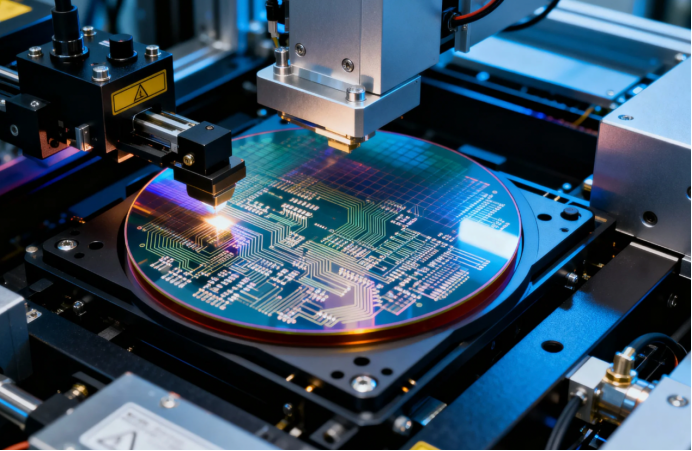
The large-scale entry of Chinese companies has directly driven a rapid decline in silicon carbide costs. Data shows that the price of a 6-inch silicon carbide substrate has dropped from 7,100 yuan in 2020 to 4,200 yuan in 2024, and continues to decline. This cost reduction has greatly accelerated the industrial application of silicon carbide.
What does this mean for the industrial automation sector? Silicon carbide power devices can significantly reduce energy losses (up to 70%) and enable smaller device sizes. This directly translates into:
1.
More energy-efficient industrial drive systems: Inverters and servo drives equipped with silicon carbide devices offer faster response and less heat generation, helping to improve the energy efficiency of the entire production line.
2.
More compact equipment design: Device miniaturization allows terminal equipment such as pneumatic components and robots to be designed to be more precise and lightweight.
3.
Higher reliability: The inherent high-temperature stability of silicon carbide material is very suitable for industrial environments with extremely high reliability requirements.
FDS Observation: The maturity of silicon carbide technology has laid a solid foundation for the development of next-generation high-performance, intelligent pneumatic components and automation systems. We are closely monitoring the new opportunities this material innovation presents in the fluid control field.
IV. Future Outlook: How will silicon carbide reshape the manufacturing landscape?
Currently, Tianyue Advanced holds a 22.8% share of the global silicon carbide market, firmly maintaining its position in the top tier. The global silicon carbide substrate market reached 9.2 billion yuan in 2024 and is expected to grow to 12.3 billion yuan in 2025. Silicon carbide also has broad application prospects in photovoltaic power generation, smart grids, rail transit, and other fields.

The rise of China's silicon carbide industry is a journey of independent innovation, from scratch to strength. Its significance extends far beyond the semiconductor industry itself. By empowering countless industries, it is driving a profound efficiency revolution. For those of us in the industrial automation field, actively embracing the technological dividends brought by material innovation is key to maintaining competitiveness.