
Huawei Mate 80 series product line strategy exposed: Enter the niche market with precise heat dissip
For tech industry observers, Huawei's product roadmap has always been a market bellwether. Latest information reveals that the upcoming Mate 80 series showcases Huawei's sophisticated market segmentation strategy, particularly through differentiated heat dissipation technology, precisely targeting different user groups from business professionals to hardcore gamers.
Multiple sources have confirmed that the Huawei Mate 80 series will include at least five models. The most eye-catching of these is not the traditional Pro+ or RS top-of-the-line version, but a newly added model specifically designed for gaming – the Mate 80 GTS. Huawei has already registered this name as a commercial trademark, indicating its determination to enter the high-performance mobile gaming device market.
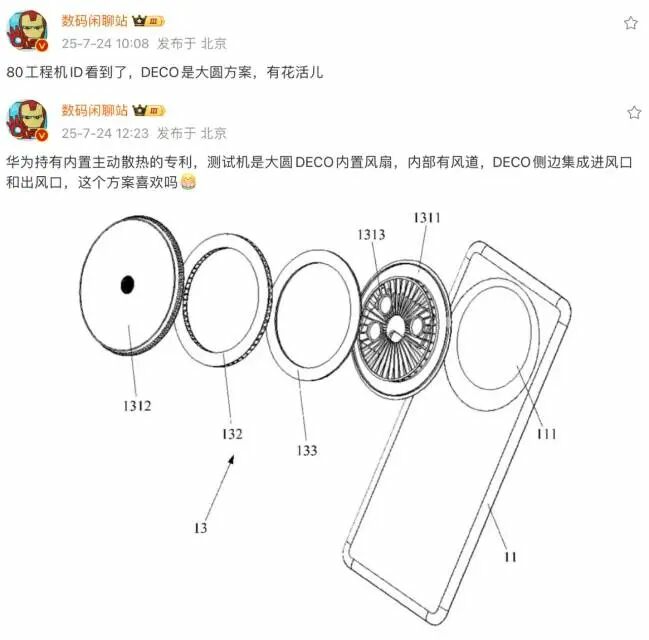
According to leaked patent sketches and information from digital blogger "Digital Chat Station," the innovation of the Mate 80 GTS lies in its active cooling system. It plans to integrate a high-speed miniature fan, air duct, and heat dissipation fins in the center of the iconic circular rear camera module (Deco), with miniaturized sealing and waterproof/dustproof treatment. When the chip temperature rises while running demanding games, the native HarmonyOS 6.0's AI temperature control algorithm will automatically activate the fan to effectively dissipate heat, preventing the CPU from throttling due to overheating, thus ensuring sustained high-performance output. To support the fan's power consumption, the model is rumored to also be equipped with an impressive 7000mAh high-silicon battery.
At the same time, Huawei is also expanding into the ultra-large screen market. In addition to the already released 7-inch large-screen model Mate 70 Air, another device under testing, a 6.96-inch quad-curved screen with equal depth, is very likely the Mate 80 GTS, further solidifying its positioning as a mobile entertainment device.
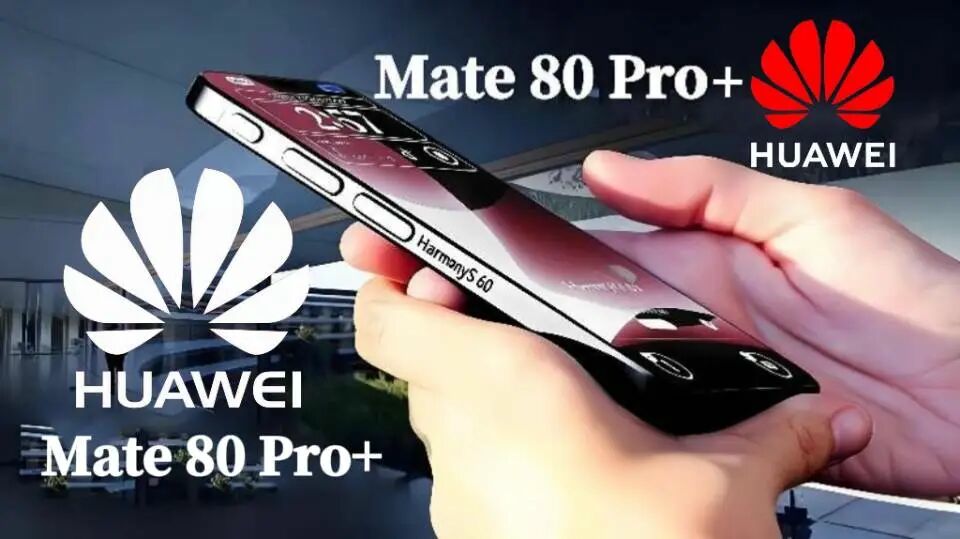
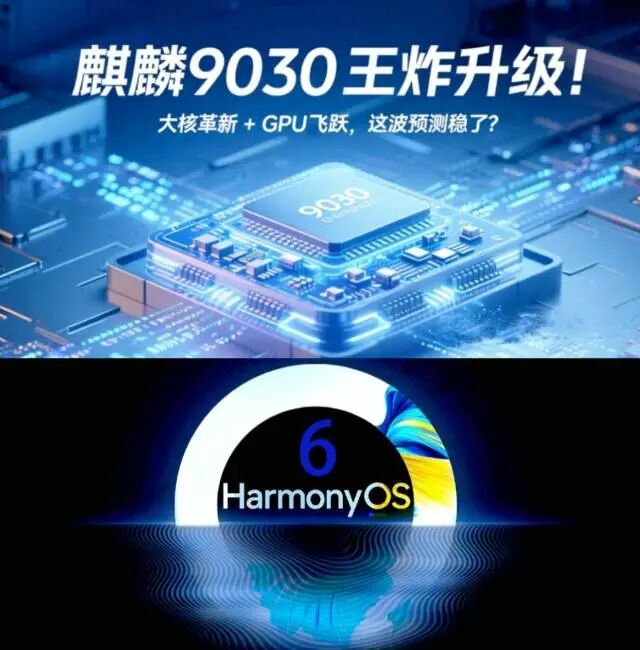
However, this doesn't mean Huawei has neglected its core high-end business users. The flagship model, the Mate 80 Pro+, employs a different high-performance solution. Reportedly, it will be equipped with the latest Kirin 9030 chip and deeply optimized with HarmonyOS 6.0, focusing on improving CPU logic operations and GPU graphics processing efficiency.
In terms of heat dissipation, the Mate 80 Pro+ does not use a fan, but instead relies on a traditional VC heat dissipation plate, a large area of graphene, and Huawei's proprietary micro-pump liquid cooling technology for passive heat dissipation. This design better meets the requirements of business professionals for quiet operation, seamless integration, and reliability. Its high performance is reflected in efficient processing of emails, video conferencing, mobile office work, and content creation (such as short video shooting and editing), aiming to become a "productivity tool" for business professionals and entrepreneurs.
Huawei's Mate 80 series product planning clearly demonstrates its market strategy of "precise technology segmentation." By employing two distinct technological paths—active cooling (fans) and passive cooling (liquid cooling/vapor chambers)—Huawei cleverly differentiates itself from gamers and high-end business users. The core of this strategy lies in not offering a "one-size-fits-all" device to meet all needs, but rather providing dedicated solutions to address pain points in specific scenarios. For the industry, Huawei's differentiated choice in the crucial technology of heat dissipation is worth close observation. It reminds us that, whether in product design or marketing, precise positioning and in-depth technological exploration are key to winning in niche markets.key.